Searching for a job during a global pandemic can be tricky. But there are a few things you can do to make it easier on yourself.
The 2020 COVID-19 outbreak took the unemployment rate from 6.2 million in February to 20.5 million in May. Peak unemployment for the year was 14.7 in April.
August unemployment finally fell back down to 8.4% as some economies have opened and adjusted to new pandemic concerns.
The question still lingers, however, whether we might see another outbreak, and how that would affect the job market down the road.
One thing is certain here: things are not going to be fully normal for some time.
We had anticipated a slow move to digital over time. Thanks to COVID, we now have to reckon with the landscape changing basically overnight.
There is a silver lining, however. In a job market fueled by algorithms, more inputs and outputs, and less non-verbal cues, there is more of a “formula” for finding work.
That means, pretty much anyone can do it. They just have to get a few X’s and O’s right.
Here are some steps you can take to find a job in a post-COVID world.
Build a Digital Presence
Finding work is no longer as simple as showing up to the desired occupation and asking if they need help. In fact, if you’re doing it right, it could be the other way around.
As the world progresses to full digitization, your employer is more likely going to find you, not vice versa.
That’s because the new economy runs on algorithms.
Yes, this has been true for a while in the working world. But prior to 42% of the workforce going remote and another 33% left jobless (and forced to seek jobs digitally), it was a small fraction of your work prospects.
Today, your digital resume couldn’t be more handy.
The first step for finding work, and hopefully drawing attention from some prospective employers, will be to establish your digital presence.
Many people have a LinkedIn account, but they don’t use it. They might see it as one of those obligatory things for being part of the workforce.
Little do they know, it’s one of their biggest employment assets. Before doing anything, every prospective employee after 2020 should work to optimize their LinkedIn profile with a picture, headline, skills and as much work history as possible.
This goes for any online networking you do. LinkedIn is just the most popular. You can do the same on Indeed, Monster, Jobs.com, or a number of freelance sites like Upwork or Freelancer.
The more places you can get your name, the better.
After you create profiles, you will want to remember that you are trying to please an algorithm. If you want employers to find you, see what they are looking for online and try to fill your profile—your headline description, especially—with keywords matching the jobs you want to attract.
This is how you make the algorithm “see” you. Tailor it to the area you want to focus on.
After that is where some of the more traditional, interpersonal elements of professional life come into play…
Master “Soft Skills”
No, you are not done talking to people altogether. Pleasing employers is still very central to being employed. A large part of that is maintaining a cordial, effective professional relationship.
“Soft skills” have always been a plus in the pre-COVID world. But in the digital realm, we only rely on our appearance and tone of voice in our interactions. Other non-verbal signals are less relevant.
For example, an interviewer sitting on the other side of a video call might not notice you squirming in your seat. Depending on the quality of your camera, they might not even notice a prospect starting to sweat.
What does matter in the new world is how you come across on the phone or on the video conference. This is totally within your control.
Prospective employees everywhere should be sharpening communication, critical thinking, adaptability, empathy and other social skills that may reflect in virtual dialogues with employers and colleagues.
There are tools all over the Internet for making this happen—hundreds of professional coaches for hire, thousands of blogs and YouTube videos with valuable tips for building these skills.
A simple Google search will get you what you need. For example, if you type “how to build empathy” in the search bar, the first result gives you eight steps for doing that:
Challenge yourself regularly
Get out of your usual environment
Ask for feedback…you get the idea.
That said, the new online economy allows for you to acquire new hard skills as well.
University tuition is at a premium. And you can learn pretty much anything online.
One of the biggest trends coming out of this is that online certifications will become more “credible.” The online world is more “niched-down” than the physical world, so when an employer sees someone in that niche has taken the time to become certified in a specific area, it’s possible that could be considered more valuable than a Bachelor’s degree down the road.
Of course, some things are not so easy to learn online and don’t translate well to the digital economy. But if you’re really stuck and want to catch the digital job train…
Reassess Your Skills
A sad truth about the future and digital transformation is that some jobs will be obsolete. Some pain points will simply not exist in the future.
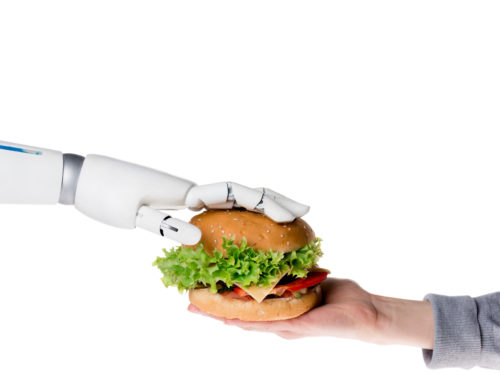
Many fast food chains and grocery stores have figured out ways to operate without cashiers. Delivery trucks may soon be autonomous. Machines are even learning how to write blogs.
We’re yet to see any limit to what machines can do, in fact. But it’s important you remember that this doesn’t mean the economy is shrinking. It’s merely changing.
There is still plenty to do for work in a post-COVID world. It’s just a matter of deciding what.
This might mean, unfortunately, that some prospects might consider adding to their skill sets or changing their line of work entirely.
Technical careers in medicine, computers and data are still not going anywhere.
You could be a cybersecurity analyst, a blockchain developer, drone pilot, administrative assistant, or any number of technical occupations involving data.
There is still plenty beyond that to explore. Courses, e-books and certifications in various specialties will become more available as society adapts.
Until then, the best advice for anyone seeking a job today is to adapt. Try to get a clear picture of what your skills are and how they could potentially fit into a future digital economy.