The Industrial Revolution took more than half the jobs way from humans in the early 1900s. Today, consumer goods and services companies are bracing for a similar impact.
Technologies like the cloud and artificial intelligence (AI) could displace the need for many roles in the years to come. According McKinsey Global, up to 800 million people could lose their jobs to AI by 2030.
There’s much speculation about exactly what shape this will take. Some might like to imagine a completely digital future where robots take all the jobs, others take a more nuanced approach, looking to futures that don’t necessarily erase work but alters the work environment in such a way that changes the demands on the workers.
Analysts are predicting what’s called a “skill crunch” in this case. This will be an event where the labor for operating and monitoring machines will be harder to find, because the skills required will be on the softer side, leaning heavily in the direction of digital tools, analytics, and data management.
Information systems are going to play a much bigger role in the future workforce of the consumer goods and services industry. The level talent that many consumer goods and services companies are competing for will often flock to bigger, flashier tech companies.
Shipping is also further and further automated with a growing ecommerce industry. The consumer goods and services market is, indeed, going to be one of the industries most significantly impacted by digital transformation in the world.
More on what that will look like…
Technology in the Future Workforce
The changes taking place will be different depending on the industry, but almost everywhere will take on a less customer-facing role and more automation where possible.
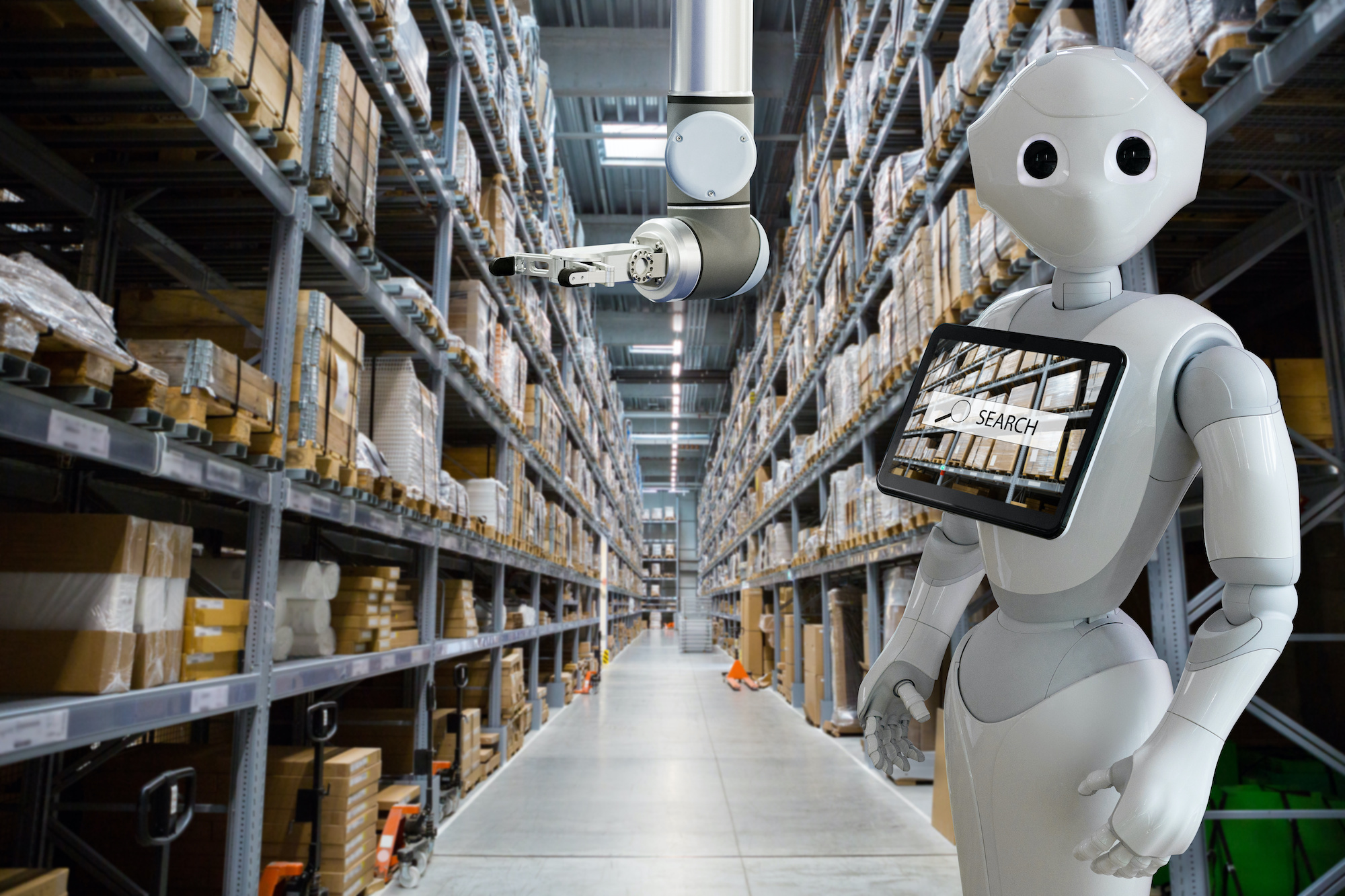
Expect the demand for physical and manual skills to fall drastically. It will not be the same industry we know today, where people can stock shelves in warehouses. Even the lifts used to raise palates could eventually operate completely independent of a human behind the switchboard.
This will not be simply lower demand for low-skilled labor. Soft skills will be more important, but they will also be more specialized. Many of the tasks involved in managing data systems can be handled by machines. Artificial intelligence and machine learning are expected to develop to the point of being self-sufficient, able to pull information from various places in an enterprise to yield a complete picture of the company’s operations.
This is all part of a big Internet of Things trend where almost every tool and product has a sensor whose activity and location can be tracked in real time. This could fundamentally change quality control, for example, to a completely objective, technical assessment by a machine, rather than using any man-power to make that judgment.
These people will no longer be doing the same thing.
However, there is a silver lining.
How the Human Jobs will Change
The number of jobs created from the advancement of AI could be even greater than the number of jobs lost.
As the world population grows and manufacturers become more efficient, it could potentially result in increased consumption of $15 trillion within the next decade. Higher demand for goods will translate to higher demand for labor.
Of course, this will be more highly-skilled labor, or people who are fluent in engineering, product design, sales, and all the things AI.
Here’s how more “soft-skilled” roles in your consumer goods enterprise will likely change in the coming years…
- Software developers and programmers will continue to find work. Again, that is not to say even these professionals will keep their jobs the same as always – in fact, their jobs will significantly change.
- Marketing will have to adapt to a more analytical role than ever before. It will no longer be solely a function of trite, quippy advertising. It will instead follow a mechanical procedure of reading analytics and making decisions based on the feedback regarding pricing and promotion.
- Research & Development will be more centralized and responsive to customer feedback in real-time. As everything is further connected, and devices can be monitored for any problems that arise, feedback can be given and adjustments can be made at the drop of a dime.
All of this will drive employers to take on new strategies for hiring. Future talent needs to consist of individuals highly literate in data and various technological tools. They will need to start looking at every job differently.
Therefore, the strategies will need to be unconventional to consumer goods companies of the past. For example, consumer goods reps may need to visit tech conferences more often to find the top digital talent.
This will impinge on the training future employees receive as they are onboarded and as they go about their career with the company. At this point, it is not about simply hiring new talent, but also to teach current hires new skills.
Of course, employees learning new skills does not have to have to be a drag for the company, as it does produce better employee-employer relationships to offer educational opportunities for advancement in or outside the company. This is one of many ways that the transformation of the workforce of the future can be as fruitful as it is challenging.
Digital innovation is only getting faster, and consumer goods providers can best prepare by simply taking on a posture that embraces the changes coming down the pike. The workforce is going to look different, and it’s up to hirers to make it change for the better.
Start Hiring Your Future Workforce Right Now
Changes to the workforce are happening at an exponential rate. Staying prepared requires unprecedented agility, and that starts with hiring the right people for the job.
Today, there are few better options than finding talent online. However, with so many places to find talent, you want to be sure you find a pool you can trust.
Newman’s International Associates (NIA) is a group of international IT experts with decades of experience. We know what’s in store for the future, and we want to help you be prepared.
Let us help you find the talent you need. Start by getting in contact with NIA today.