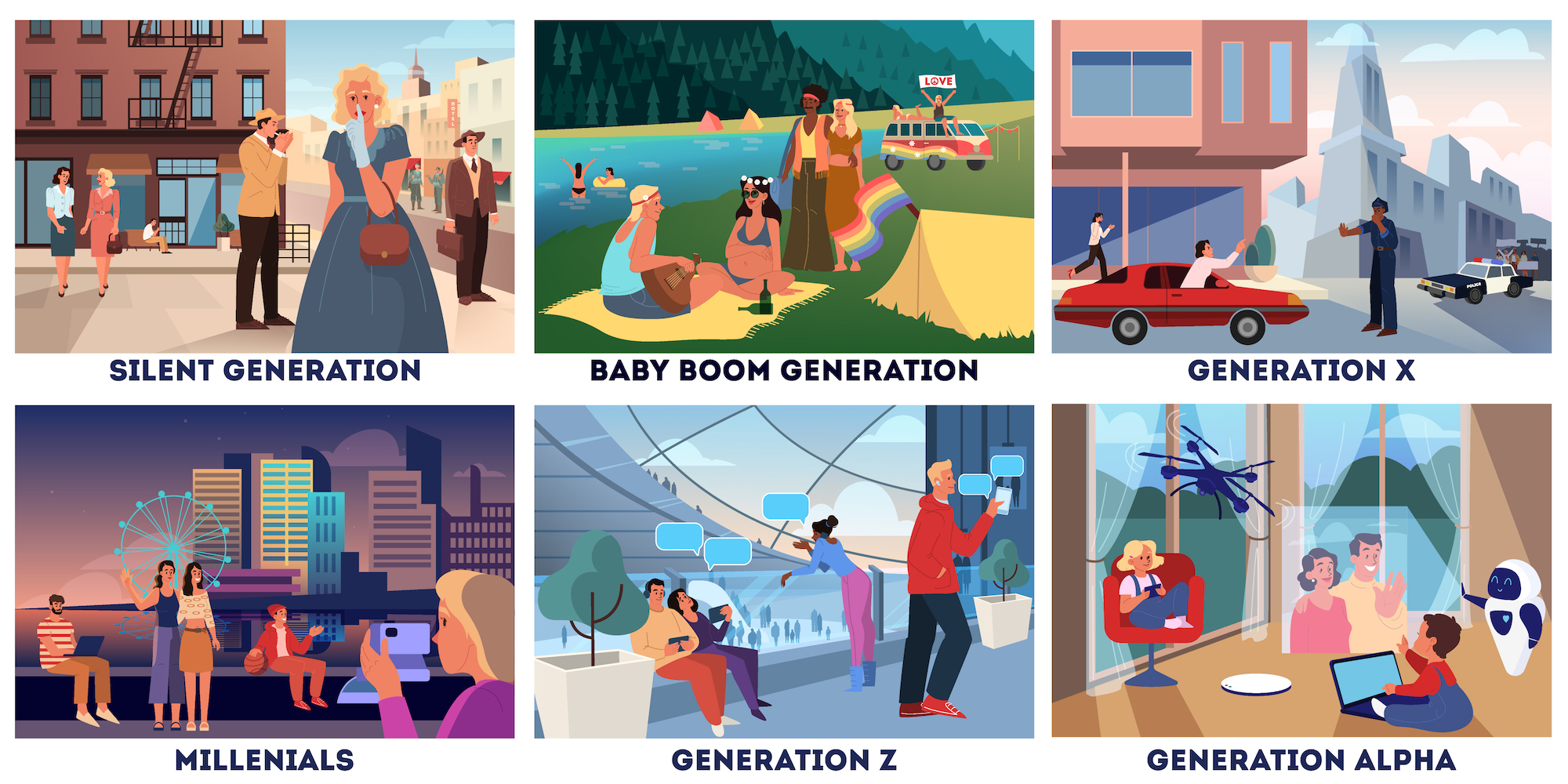
Over the past fifty years, the US workforce has welcomed many generations, such as “Generation X,” “Baby Boomers,” “Generation Y” and, more recently, “Millennials.” And the trends and characteristics of the latter are now dominating most employment studies in the country. However, times are fast changing, and as many Millennials are approaching their mid-30’s and also taking on leadership or executive positions in organizations, attention is now shifting to the next age group that will enter the workforce – “Generation Z.”
Did you know that the Gen Z group now makes up more than 25% of the US population, the biggest percentage of any group! And this important group contributes almost 44 billion to the US economy alone! Soon, they will make up 1/3 of the US population. Millennials, on the other hand, are individuals who have reached adulthood around 2000.
Although it may be easy to consider that Gen Z and millennial workers are similar, note that recent research studies indicate that these 2 generations are considerably different, especially when it comes to their expectations and preferences for the job search process. Because of this, companies are presented with new challenges and obstacles to adjust their work environment as well as corporate culture to accommodate and welcome this new and important generation.
There is no doubt that the value in understanding and appreciating the key differences between these two segments will help you better prepare your company for the future, shifting leadership and marketing while helping you adapt efforts in order to remain relevant and competitive in the future.
Tech-savviness
You may know that people from Generation Z are often known as “true digital natives.” This is because these people have been exposed to social media, the internet, and a smartphone-centric society almost from their birth.
While Millennials can remember a time before the smartphones took over, a majority of Gen Zs grew up with smartphones and social media as an integrated and useful part of their lives.
Collaborative or Independent
According to research, 71 percent of Gen Z said that they strongly believe the phrase “if you would like it done right, you should do it yourself.” On the other hand, when given the chance to arrange a group of office desks, Millennial employees would opt for a shared and collaborative arrangement, assembling the office desks into a circle.
Gen Z will likely be more competitive with their peers and will also harness their do-it-yourself mentality in the workplace. In fact, almost 70 percent of Gen Z would prefer to have their own workspace instead of sharing it with somebody else.
Pragmatic or Idealistic
Millennials are an optimistic generation that is usually seen as being pandered to by their parents and other adults. In contrast, Gen Z employees are more pragmatic. While most Millennials in the country were raised during an economic boom, note that Generation Z grew up during a recession.
So, the generation has mainly been shaped by both the economic and financial pressures during their childhood years. This is the reason the most effective marketing towards Generation Z tends to focus on long-term value and financially smart investments.
Formal Education or On-Demand Learning
According to research by Sparks & Honey, almost 75 percent of Gen Z say that there are other and better ways of getting a good higher education than going to college. Did you know that many Millennials question if their massive student debt was really worth it? This is especially true, considering that almost 44 percent of recent college graduates are employed in jobs that do not require degrees and 1 in 8 recent college graduates are unemployed.
Generation Z is more willing to explore other education alternatives. For example, they will pursue just-in-time or on-demand learning solutions, such as how-to YouTube video tutorials, or will look for employers and companies that provide robust on-the-job training and development.